The financial world in India is standing on the edge of a historic transformation. After 65 years of navigating the complex, often confusing corridors of the Income Tax Act, 1961, the nation is officially moving to a new era.
What is the New Income Tax Act 2025?
The New Income Tax Act, 2025, is a revised version of India’s income tax law. It replaces the old Income Tax Act of 1961, which had been in force for more than 60 years. Over time, the 1961 law became very lengthy and complicated due to hundreds of amendments and its technical language.
The new Act has been approved by Parliament and signed by the President, making it the official law that will govern income tax in India. Its main purpose is simple — to make tax rules easier to read, easier to understand, and easier to follow.
Instead of long and confusing legal sentences, the new law uses clearer language. Sections have been reorganised in a better way, unnecessary repetition has been removed, and the structure has been simplified. The goal is to help taxpayers clearly understand their rights, responsibilities, and compliance requirements without needing to struggle through complex legal wording.
In short, the New Income Tax Act 2025 is designed to make India’s tax system more modern, transparent, and user-friendly.
The New Income Tax Act, 2025, is set to become our new financial reality starting April 1, 2026. This isn’t just a regular budget update; it is a complete “clean-slate” rewriting of the law. If you’ve ever felt that tax laws were written in a language meant only for lawyers, this reform is for you. It aims to make taxation simpler, digital-first, and far less stressful.
Why Did India Replace the 1961 Act?

Simplification & Modernisation
The old Income Tax Act of 1961 had been in use for more than 60 years. Over time, many changes and amendments were added to it. Because of this, the law became very long, complicated, and difficult to understand. The language used in the Act was also old-fashioned and full of technical legal terms, which made it confusing for common taxpayers.
The new Income Tax Act 2025 aims to solve this problem. The government has reduced the number of sections from around 819 to 536. Many unnecessary and repetitive parts have been removed. The wording has been simplified so that people can read and understand the law more easily. This makes it easier for taxpayers, accountants, and businesses to find the rules they need without getting lost in complicated language.
Effective Date & Applicability
Even though it is named the Income Tax Act, 2025, the new law will actually start applying from April 1, 2026. This means it will be effective from the Financial Year 2026–27 in India.
The government has kept this gap on purpose. It gives enough time to everyone, taxpayers, businesses, chartered accountants, and the tax department, to prepare for the change. Forms, return filing systems, software, and compliance procedures need to be updated according to the new rules.
In simple words, the law was passed in 2025, but it will be used for income earned from April 1, 2026, onwards. This transition period ensures that the shift to the new system happens smoothly without confusion.
Here is a comprehensive guide to the 10 biggest changes that will redefine your relationship with taxes in 2026.
1) New “Tax Year” Concept
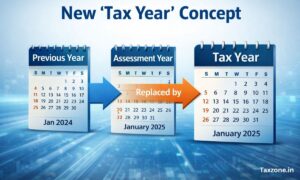
One of the biggest and most important changes in the new law is the introduction of a single term called “Tax Year.”
Earlier, the tax system used two different terms, “Previous Year” and “Assessment Year.” This often confused people because income was earned in one year and then taxed in the next year. Many taxpayers struggled to understand which year they were actually filing for.
Now, the new Act removes this confusion by using just one simple term: Tax Year. This means the year in which you earn the income is the same year used for tax purposes. There is no need to think about two separate years anymore.
This change makes tax filing easier to understand, reduces confusion about deadlines, and simplifies calculations. In short, one year, one name, much simpler and clearer for everyone.
2) Simplified Tax Law Structure
Another major improvement in the new Act is its simpler and better structure. Over the years, the old tax law had become very long and difficult to follow because of too many amendments and complicated wording.
The new Income Tax Act 2025 has been reorganised more clearly and logically. The chapters are arranged properly, definitions are easier to understand, and important rules are placed where they can be found quickly. Unnecessary and outdated provisions have been removed.
The total length of the law has also been reduced. There are fewer sections and less confusing language. This shows that the government wants to make tax rules easier to read and understand for common taxpayers, professionals, and businesses. In simple terms, the law is now shorter, cleaner, and more user-friendly.
3) No Change in Tax Slabs (FY 2026–27)
Even though the Income Tax Act has been completely updated, the tax slab rates have not been changed for the Financial Year 2026–27. The same tax rates that were announced in the Budget for FY 2025–26 will continue under the new system.
Here are the current tax slab rates under the new regime:
| Income Range | Tax Rate |
|---|---|
| Up to ₹4 lakh | Nil |
| ₹4–₹8 lakh | 5% |
| ₹8–₹12 lakh | 10% |
| ₹12–₹16 lakh | 15% |
| ₹16–₹20 lakh | 20% |
| ₹20–₹24 lakh | 25% |
| Above ₹24 lakh | 30% |
This means taxpayers do not need to worry about new rates for now.
In addition, the higher Section 87A rebate is still available. Because of this rebate, resident individuals choosing the new tax regime can have income up to ₹12 lakh effectively tax-free (subject to conditions).
So, while the law structure has changed, the tax rates remain the same for FY 2026–27.
4) Higher Rebate & Relief Continued
The good news is that important tax benefits are still available under the new Act. The government has continued the rebate and standard deduction benefits, which provide relief to many taxpayers.
4.1 Section 87A Rebate
The rebate under Section 87A is still available under the new system. This rebate helps middle-income taxpayers reduce their tax burden.
Because of this rebate, many resident individuals earning up to ₹12 lakh may end up paying very little or even no income tax under the new regime (subject to conditions). This is especially helpful for salaried employees and small business owners who fall in the middle-income group.
In simple terms, if your income is within the limit and you choose the new regime, this rebate can significantly reduce your tax liability.
4.2 Standard Deduction Rules
Salaried employees will continue to receive a standard deduction of ₹75,000. This means ₹75,000 is reduced from your salary income before calculating tax.
Because of this deduction, your taxable income becomes lower, which reduces your overall tax. It also increases your take-home salary.
So, even though the law has changed, these important relief benefits remain in place, giving financial support to millions of taxpayers.
5) Changes in TDS & TCS Rules
Along with other reforms, the government is also planning changes in how taxes are collected through TDS (Tax Deducted at Source) and TCS (Tax Collected at Source). These updates are meant to make the system smoother and more practical for taxpayers and businesses.
5.1 Monthly TDS Return Proposal
At present, TDS returns are generally filed every quarter. There is a proposal to change this system and move to monthly TDS returns.
The idea behind this change is to make tax reporting more regular and up-to-date. It can help reduce last-minute pressure at the end of the quarter and improve overall compliance. For businesses and employers, this may make tax reporting more organised and timely.
5.2 Lower TCS for Education & Medical Expenses
Another important proposal is to reduce TCS on overseas education and medical expenses. Currently, TCS is collected at 5% on such payments. The government is considering reducing it to 2%.
If implemented, this will lower the upfront tax burden on families sending children abroad for studies or paying for medical treatment outside India. In simple terms, it will make international education and healthcare slightly more affordable for Indian citizens.
6)New Compliance Deadlines
The government has also changed the deadline for correcting income tax returns. Under the new rules, taxpayers can now revise their income tax return up to March 31 of the relevant year for a small fee.
Earlier, the time limit was shorter, which made it stressful for people who discovered mistakes later. Now, you get more time to correct errors, update missing details, or fix calculation mistakes.
This change gives taxpayers greater flexibility and reduces unnecessary tension. In simple words, if you make a mistake while filing your return, you now have more time to fix it properly.
7) Changes in Exemptions & Allowances
The new tax system focuses on simplicity, but the government has also increased some important exemptions and allowances under the Old Tax Regime. These changes have been made to match today’s rising costs and economic conditions.
Here are the updated limits:
- The children’s education allowance has increased from ₹100 to ₹3,000 per child per month.
- Hostel allowance has increased from ₹300 to ₹9,000 per month.
- Free meal exemption has increased from ₹50 to ₹200 per meal.
- The non-cash gift exemption has increased from ₹5,000 to ₹15,000 per year.
These higher limits can reduce taxable income for those who choose the Old Tax Regime.
However, it is important to remember that these benefits are available only if you opt for the Old Regime. Taxpayers choosing the New Regime will not get these specific exemptions.
8) Changes for NRIs & Foreign Asset Reporting
The new tax law also brings changes for NRIs (Non-Resident Indians) and people who have assets or income outside India.
Under the updated rules, there will be stricter requirements for reporting foreign assets and foreign income. This means taxpayers will need to be more careful and transparent when declaring overseas bank accounts, properties, investments, or other foreign holdings.
At the same time, recent court decisions have provided some relief. The courts have made a difference between “involuntary residents” (people who had to stay in India due to special situations or legal restrictions) and regular residents. This clarification may reduce compliance pressure for certain individuals who were unintentionally treated as residents for tax purposes.
In simple terms, foreign income reporting rules are becoming stricter, but there is also more clarity to avoid unfair treatment in special cases.
9) Capital Gains & Investments
The new Act also makes some changes in how certain investments are taxed.
For example, if you buy Sovereign Gold Bonds (SGBs) from the secondary market and later sell them at a profit, that profit will now clearly be treated as capital gains. This brings more clarity to how such investments are taxed.
There are also updates in the taxation of digital and passive income, such as dividend income. In some cases, taxpayers will no longer be allowed to claim interest expenses as a deduction against dividend income.
In simple words, the government has clarified how profits from investments and passive income will be taxed. This helps reduce confusion and makes tax treatment more straightforward for investors.
10) Procedural & Digital Reforms
The new Income Tax Act also focuses on making the tax system more digital and transparent. The government wants to reduce paperwork and make most tax processes online and hassle-free.
10.1 Faceless Assessments
Under the new system, faceless assessments will continue and become the normal process. This means that tax scrutiny, reassessment, and appeals will mostly happen online.
Taxpayers will not need to visit the tax office physically in most cases. Communication will take place through the official online portal. This reduces personal interaction, saves time, and lowers the chances of unfair practices or corruption. It makes the system more transparent and convenient.
10.2 Modern E-Filing System
The income tax e-filing system is also being updated to match the new law. Return forms, schedules, and online compliance portals are being redesigned according to the structure of the Income Tax Act 2025.
This will make tax filing more organised and user-friendly. In simple words, the entire process, from filing returns to responding to notices, is becoming more modern, digital, and easier for taxpayers to use.
Other Important Technical Changes
Apart from the major changes discussed above, there are some smaller but important technical updates in the new tax law.
- The limits for PAN reporting in high-value transactions have been revised. This means certain transactions may now require PAN details based on updated thresholds.
- In case of property sales involving non-residents (NRIs), TDS payment will now require challan filing linked directly with the PAN number.
- The rules related to MAT (Minimum Alternate Tax) credit have been relaxed for companies that are moving to the new tax regime. This will make the transition easier for businesses.
In simple terms, these changes may look technical, but they aim to improve reporting, make compliance smoother, and reduce confusion for taxpayers and companies.
Impact on Salaried Individuals
For salaried people, these changes can be helpful. Lower TCS rates, simpler compliance deadlines, and higher allowances under the Old Tax Regime may give more flexibility in tax planning. In some cases, this can also increase your take-home salary.
The new structure is easier to understand, which makes it simpler to choose between the old and new tax regimes.
Impact on Businesses & Startups
Businesses, especially startups and small companies, may benefit from clearer tax rules and simpler procedures.
Clear guidelines on digital income, employee stock options (ESOPs), and international transactions will reduce confusion and lower the chances of disputes. This will help businesses plan their finances with more confidence.
Tax Planning Under the New Act
Proper tax planning will become even more important. You should:
- Compare the old and new tax regimes to see which gives you a higher post-tax income.
- Plan the timing of capital gains carefully.
- Check if you can benefit from higher exemptions under the old regime.
Conclusion
The New Income Tax Act 2026 is an important step towards making India’s tax system simpler and more modern. While tax slabs are mostly the same, the new law makes rules clearer and processes smoother.
Whether you are a salaried employee, an NRI, or a business owner, understanding these changes will help you make better financial decisions and manage your taxes more effectively in the coming years.
Frequently Asked Questions (FAQs)
1. When does the New Income Tax Act come into effect?
It will come into effect from April 1, 2026. It will apply to income earned in the Tax Year 2026–27 and later years.
2. Do tax slab rates change under the new Act?
No, the tax slab rates remain the same as announced in Budget 2025 for FY 2026–27.
3. Is the concept of Assessment Year removed?
Yes. The new Act removes the terms “Previous Year” and “Assessment Year” and introduces a single concept called the Tax Year to make things simpler.
4. Are HRA and other allowances changed?
Yes, some allowances under the Old Tax Regime are increased. However, these benefits are not available under the New Tax Regime.
5. Will TDS and TCS filing frequency change?
There is a proposal to make TDS filing monthly and reduce certain TCS rates. Final details will be clarified in the rules under the new Act.
6. Do I need to choose between the Old and New Tax Regime again?
Yes, taxpayers will still have the option to choose between the Old and New Regimes, depending on which one is more beneficial for them.
7. Will salaried individuals benefit from the new Act?
Yes, salaried individuals may benefit from simplified rules, reduced compliance burden, and possibly higher take-home salary depending on their tax planning.
8. How does the new Act impact businesses and startups?
Businesses may benefit from clearer rules, fewer disputes, and better clarity on digital income, ESOPs, and international transactions.
9. Are capital gains rules changed?
Certain clarifications have been made, such as treating gains from Sovereign Gold Bonds purchased in the secondary market as capital gains. Other refinements may also apply.
10. What should taxpayers do before April 1, 2026?
Taxpayers should understand the new Tax Year concept, review updated TDS/TCS rules, check eligibility for exemptions, and update accounting or payroll systems.
11. Does the new Act make tax filing easier?
Yes, one of the main objectives of the new Act is to simplify language, reduce confusion, and make compliance easier for taxpayers.
12. Will the new Act affect NRIs?
Yes, NRIs should review changes related to TDS, capital gains, and international income to ensure proper compliance under the new rules.
Read this Post Also
Capital Gains Tax on Property Sale – How to Save LTCG Tax in FY 2025-26 ?